Vitalism isn't just a philosophy; it's a way of life. Living vitalistically means that you must consciously consider everything that you ingest, whether it's a food or a thought. Everything you put into your mind and body ... affects the body
Showing posts with label exercises. Show all posts

Monday, September 5, 2011

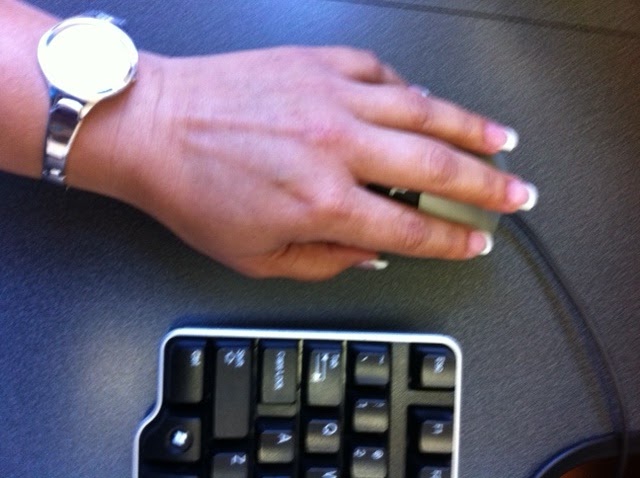
I'm left handed now!


It only took 40 years but I've gone left handed.

Using a mouse that is, for all else I still use my right hand predominately.The change was amazing and by balancing the body in this one area, it had a ripple effect every where else. My neck and shoulder stress has diminished, the subluxations in this area were significantly less. My overall posture at the computer ( where I've been spending more and more time) has improved and relaxed.

Let me take you back over 18 months now. My desk has always been ergonomically sound, we took great care when setting up the office to look at such issues. A few years ago we had chairs specifically built for us. I can tell if someone has changed chairs with mine and if they have changed the settings :) But longer hours spend typing away, like I am now meant that on top of my daily adjusting patients, my wrists were causing me great concern.

Looking after my patients is my joy, so my only thought was to look outside of the box to a solution. My right hand and my work were one and the same. Then the thought came to me that my left hand was capable, just untrained and it could be put to good use, after all plenty of people had probably made the same changes after injury and illness.

The first month was all about giving my left hand an experience of using the mouse. Yes it felt strange at first. I played solitaire on the computer to help with general mouse movement, while it went a long way to help my control it did little for my scores. Then I progressed to reading my emails and generally using it to surf, with each of these activities I worked mainly in the less busy times of the day. Interval training helped me to lighten the load away from my right hand and not over burden the left at the same time.

Slowly but surely I picked up speed in the second months and by months end I knew I had reached a milestone when I went to use another computer in the office and searched for the mouse with my left hand. Strength and speed have increased with time and I still focus on my posture. My next venture is getting used to my saddle seat at home. But that's another story for another time. For now I balance my load of work with both hands and exercise my wrists and hands along with regular adjustments.

Please note these exercise may not be for everyone, please check with your Chiropractor if they would recommend them specifically you. Remember to take care not to force your hands or wrists and please take your time.

Stretch Out.- We are constantly gripping things with our hands. The pen we write with, the door handle we open the door with, even using the keyboard to strike the keys with is a partial gripping action. While a stress ball feels great at times, again its a gripping action at work. Balancing what the hands do, will mean we should stretch out the whole hand.

  • Step 1, place your hands palm side down on a flat surface and relax your wrists. 
  • Step 2, gently spread your fingers apart and hold them for a count of 5.
  • Step 3. repeat for 3 to 5 times.


Stretch back - Now that your fingers are gently warmed up, try the next stretch to get that extra flexibility going.

  • Step 1. from the relaxed position in Stretch out, lift just your fingers off the flat surface. Try to keep the palm of your hand on the flat surface and still. Hold this for a count of 5 or less if this it too much for the first time. Slowly build up to it, there is no use over doing it at the beginning.

  • Step 2, repeat for 3 to 5 times.


Make a Fist - After you have exercised in one direction its now time to do the other direction.
  • Step 1, from the relaxed position in Stretch out, make a gentle fist with your hands. Again hold for a count of 5 or what ever you are first capable of.

  • Step 2, repeat for 3 to 5 times.


Wrist moves - Moving up from the hands, its now time to move those wrists. Gentle! Please be aware that forcing any of these moves is NOT what these exercises are about, you are just after a gentle stretch pressure. If any of these hurts please stop and discuss your difficulties with your Chiropractor.
  • Step 1, from the relaxed position, bend one or both your wrists at the same time UP and hold for a count of 5 or as what ever you are capable of. Then rest your whole hand flat.

  • Step 2, lift your whole lower arm off the flat surface, keeping as horizontal as possible and bend down at the wrist. Hold for a count of 5. Rest once you have done that.

  • Step 3, repeat for 3 to 5 times in both directions. Alternately you can do this exercise with both hands together for light or greater resistance.


Wednesday, February 2, 2011

Exercise plays a greater role in increasing bone density in older men


In an Australian study, it was found that in older men, their level of bone density was greatly helped more by exercise than by the consumption of extra Vit D and Calcium alone. 
Over the 18 months that the study was conducted, those that exercised, had a better bone mineral density reading than those that just took the supplements. While this might be the case I would still recommend that everyone pay close attention to their diet and their levels of supplements to maintain an overall healthy out look.

Wednesday, November 3, 2010

Is your teenager doing exams?

The season for exams is fast approaching. Our year 12 students will soon sit their last exams and parents nation wide will be left wondering and agonising over their children's health and well being.

Are they getting enough sleep?
Are they getting enough exercise, what about their diet.
Could they change their study posture?

A word of gentle advise – don’t try anything too drastic at this time. Definitely support them in their efforts, but if its not something they are already used to, doing it now might be more harmful. Cover the basics of sleep, exercise, nutrition and good spinal health.

If their normal out of exam node sleep pattern is maintained or closely followed that should help to carry them through. Forcing them to get more sleep may just prove to be a waste of time. Sure they need their sleep, but just like when they were toddlers if they didn’t want to go for a nap, they won’t. Encourage them to take breaks from their studying. Eating smaller meals more often might help with maintaining their energy levels and certainly encourage their intake of water. Maintain their regular spinal adjustments.


For their nerves and stress levels - I have to quote my own Mum here. She would see me getting all bent out of shape about something and it would detract me from my task of studying so she would say " Ok sit and worry for 10 minutes, then get back to work".

Get it out of your system and then move on.


Good luck to all those in exams.


Thursday, October 28, 2010

Blood pressure drops when overweight children lose small amounts of weight.


The strains of being overweight on the body mentally and physically are numerous.  Blood pressure is but one of the factors that can change with an increasing waistline and in children it sets them on a rollercoaster of long term health issues.

Our blood pressure is a measure of the force at which blood courses through our system. 120/80 has been set as the normal reading for blood pressure and is taken in measurements of millimetres of Mercury. The reading 120/80 is in fact two measurements. You would read this as 120 over 80 mm of Hg(Mercury). This is a measure of amount of force pushing against your artery walls when the heart is contracting and when the heart is at rest. The first figure corresponds to when your heart is contracted – the Systolic pressure. The second figure is the Diastolic pressure- when the heart is at rest.

Reading taken above the norm are given the term Hypertension – hyper meaning raised, therefore high blood pressure and readings lower than the norm are classified as Hypo-tension – hypo meaning low or decreased.

For anyone either of the two extremes have serious health outcomes. But for a child to experience hypertension – High blood pressure describes a condition that places their heart at risk, in fact their whole cardiovascular system. Literally their whole system is always operating under stress, being forced to work above the level that it can tolerate.


A Canadian study has also shown that obese children have the arteries of an elderly person.The aorta in particular is seen to be severely under stress in these children.When the aorta is placed under constant pressure it loses its elasticity and stiffness occurs, this then is associated with complications of the cardiovascular system and even early death
Reducing the Childs weight through effective healthy lifestyle changes promotes a responsible long term solution for that child. Small weight changes have been shown to decrease blood pressure in the severely overweight child. Education is the key here, BEFORE the use of medication. 

Prevention, being proactive and setting long term goals is vital in this situation.


Monday, October 18, 2010

simple stretches for our children

Getting us oldies to change our routine is often fraught with excuses and dramas, but teach a child something early on in life and they will accept it more readily into their routine.


Straighten Up was also designed to be brought into the school curriculum to teach our children about looking after their spinal health.These simple exercises are a great way for children to learn to look after their bodies and keep them in a regular habit of exercising.

Please visit the link below for a great exercise routine to share with your children.

http://www.straightenupamerica.org./Handouts/files/page2_2.pdf

Please Note: Check with your Chiropractor or other healthcare professional before starting "Straighten Up" to make sure these exercises are appropriate for your specific needs.


Monday, October 11, 2010

Straighten Up Australia

If you're looking for a daily stretching program that enables you to get that overall stretch happening - then Straighten Up is for you. Designed by Ron Kirk of Life University, this program is being used to promote spinal health throughout the USA.

During my studies at Life Uni, Ron was a keen advocate of daily spinal health. We as students all took his spinal health care classes as part of our curriculum. This routine takes 3 minutes to complete, does not need fancy special equipment and can and should be done easily at home.

Done routinely, these Straighten Up exercises focus on getting your body ready for the day ahead. They can be done before your day even commences or even in a break during the day. Theses exercises form a great platform for an active healthy lifestyle.


For how to do these exercises click on this link. Straighten Up


Please note : Check with your Chiropractor or other healthcare professional before starting "Straighten Up" to make sure these exercises are appropriate for your specific needs.

Sunday, September 12, 2010

Of mice and men.

Testing on animals is always going to be controversial. A recent study into the effects of supplementing our diet with Omega 3 fatty acid, found that in mice, it had a positive effect. However when it came to the effects in humans, many of these animal studies miss the mark. Mice are chosen in these tests for their close link to us genetically - strange but true. So to test on mice, it would seem reasonable to assume that we would be seeing similar results in us too.

This study in particular, while understanding the downfall in this assumptive link, still sites that supplementing our diets with Omega 3 fatty acid can have a positive effect, especially to reduce the inflammation response in our bodies. This is the case with Diabetes in particular. While it is still in the individuals best interest to manage their weight and include a level of exercise in their daily activity it can have no known ill effect to also supplement with Omega 3 fatty acids to reduce the effect of inflammation.
On the positive side of things, the study did find that Omega 3 fatty acid worked by blocking the inflammatory process in the cells. Since chronic inflammation can lead to insulin resistance this could help in reducing the onset of type 2 diabetes.

Wednesday, September 8, 2010

A new Diabetes link.


"Diet and exercise are widely known to impact the risk of type 2 diabetes, but few people realize that breast-feeding also reduces mothers' risk of developing the disease later in life by decreasing maternal belly fat," said Dr. Eleanor Bimla Schwarz, an assistant professor of medicine, epidemiology, and obstetrics, gynecology and reproductive sciences at the University of Pittsburgh, in a news release from the university.

So what is Diabetes?
Diabetes refers to two conditions centred on your blood glucose levels. Your body is fuelled by glucose, all the food that you digest is broken down in vitamins and mineral and fuel – glucose. Managing how much glucose is in your blood stream is your Pancreas job.

Having too high levels of blood sugar levels or too low levels causes the body stress. Normally your pancreas responds to these altered levels and controls the level of glucose in the blood by releasing insulin. Insulin is a hormone; it helps to move glucose out of the blood stream and into your cells to give them energy to carry out their normal functions.

Type 1 Diabetes stems from a problem with the pancreas that does not produce insulin or very little at all. Leaving the body to cope with rising levels of blood sugar that go unchecked. In the long term this can produced devastating results and damage, especially to your heart eyes, kidney, nerves and gums and teeth. This type of diabetes is often developed in childhood or in young adults. However other ages can be affected
.
The typical symptoms may include
  • Being very thirsty
  • Urinating often
  • Feeling very hungry or tired
  • Losing weight without trying
  • Having sores that heal slowly
  • Having dry, itchy skin
  • Losing the feeling in your feet or having tingling in your feet
  • Having blurry eyesight
Type 2 Diabetes is a different issue. The insulin that your pancreas produces to move sugar out of your blood stream and into your cells in this case becomes ineffective – the body is resistant to the effects of insulin. Unlike type 1 where the solution would be to provide an external source of insulin for the body, type 2 is not as easily helped. A far better solution would be to prevent this from even occurring.
Management of weight and regular exercise is at the core of type 2 diabetes prevention. Now with the new study it looks like mothers that breast feed their babies can also reduce their chances of developing this type of diabetes.The symptoms of type 2 diabetes can develop slowly over a long period of time
:
§  Increased thirst and frequent urination. As excess sugar builds up in your bloodstream, fluid is pulled from the tissues. This may leave you thirsty. As a result, you may drink — and urinate — more than usual.
§  Increased hunger. Without enough insulin to move sugar into your cells, your muscles and organs become depleted for energy. This triggers intense hunger.
§  Weight loss. Despite eating more than usual to relieve hunger, you may lose weight. Without the ability to use glucose, the body uses alternative fuels stored in muscle and fat. Calories are lost as excess glucose is released in the urine.
§  Fatigue. If your cells are deprived of sugar, you may become tired and irritable.
§  Blurred vision. If your blood sugar is too high, fluid may be pulled from the lenses of your eyes. This may affect your ability to focus clearly.
§  Slow-healing sores or frequent infections. Type 2 diabetes affects your ability to heal and resist infections.
§  Areas of darkened skin. Some people with type 2 diabetes have patches of dark, velvety skin in the folds and creases of their bodies — usually in the armpits and neck. This condition, called acanthosis nigricans, may be a sign of insulin resistance.
For further information visit Diabetes WA


Tuesday, August 24, 2010

Fibromyalgia Update

Following on from two recent studies dealing with how best to help a patient with FM, it has been suggested that along with behaviour therapies a gentle form of exercise is also recommended. This could be tailored to suit the individual. All the studies so far show positive results for FM patients.

The key points raised were.

 With the help of behaviour therapy patients can get help with their fear of pain and help set realistic goals to increase their level of daily activity. Gentle exercise done frequently helped in the management of stress and anxiety levels

 With patients that tended to overdo it, an exercise plan was set out to work at a much more reasonable level .Thus not falling into the pitfalls of doing too much and then not being able to do much at all. Working on a program that focused on frequently doing some form of exercise, but choosing from a low impact range of activities was more beneficial.

 Not only were the patients better able to cope, but it was reported that they shown signs of improvement in areas of depression and anxiety up to 6 months after the trials were completed.

 Tai chi was used with a group of patients as the form of exercise and the results proved that they had experienced a decrease in pain and an increase in the ability to do daily tasks without pain and with less fatigue.

Water walking is an excellent choice of exercise also. Low impact and helps to strengthen the core muscles.Unlike walking on an even soft surface like grass, walking in water allows the joints in the lower half of your body to be used, but not stressed. Allowing you to use the whole body in its correct form and posture allows the body to regain some of its tone and flexibility


Management was the aim behind all of these studies.

Thursday, August 5, 2010

Looking after your lower back

You’ve been sitting down all morning trying to get to the bottom of your work pile when you notice that you haven’t moved in hours from your desk. You think it’s high time you got out of that chair and stretched. Your Chiropractor has told you often enough..

Do you know why?
After only 15 minutes of sitting down your lower back experiences compressive forces that reduce your natural spinal curve and the height of the vertebrae themselves and the discs,– even when you’re doing it well!! 15 minutes isn’t long in anyone’s books. How are you going to reduce the stress in your lower spine – spinal de-compressive exercises.


Seated Exercise
Sit forward in your chair as shown in the picture below. Rest your hands behind you on the chair. Keep your arms slightly bent. Start by lifting your chest in an upward direction, followed by your lower back. Keep your bottom still on the chair. This should feel like something is pulling you towards the ceiling. Next focus on stretching and straighten out your elbows. Keep this stretch for a count of ten and relax. Repeat two or three times.


This coordinated stretch reduces those forces felt in your lower back after sitting down. When done frequently throughout the day, it releases the tension and helps the mind stay on track.


If you’re able to get down on the floor and do a double leg lift, or even bring one knee towards your chest (knees and toes pointing to the ceiling) at a time. Alternate and feel your lower back relax.


How much force is your lower back experiencing?

Lets say you’re an average 70kg person.Your standing at ease. The third lumbar vertebra in your lumbar/lower spine experiences roughly 51 kg of force. That equates to about 73% of the bodys weight felt at the joint.


Here are some more statistics

Sitting without a lumbar support equals 71 kg of force on the L3 vertebrae – Yes more than the actual weight of the individual.

Sitting with a lumbar support 41 kg – time to get that chair looked at isn’t it?

Coughing produces 61 kg of force.

Doing sit ups 122 kg of force.

Bending forward and rotating 20 degrees holding a 10 kg weight – 214 kg of force!!!. Think of yourself getting the shopping out of the car and reaching into the corner of the boot to get that last shopping bag. Or bending down to pick up your toddler and placing them on your hip. 10 kg now becomes 214 kg.

In a moment of not thinking about what you’re doing or how you’re doing it, you can put extreme force on your lower spine without even realising it. We often forget just how much work our lower back is doing for us. And what do we do for it? Do these stretches to start with and have your spine adjusted by your Chiropractor.

Yours in Health

Dr Lucy


Source

http://www.dynamicchiropractic.com

Disc Pressure Measurements NACHEMSON, ALF L. MD (C) Lippincott-Raven Publishers.